Recovery for Hockey Players: Tournament Weekends and Hydration
Hockey tournaments can mean three or four games in two days, cold rinks, hot equipment, rushed meals and early wake-ups. Whether you play in an adult league in Vaughan or travel with a competitive team, how you recover between games often decides how you finish the weekend.
Short answer: hockey players lose a lot of sweat under their equipment, even in a cold arena. Between games, focus on fluids with sodium, carbohydrates and protein, sleep and quick care of knocks and strains. For adult players who end a tournament weekend depleted, an IV recovery drip can help them catch up afterwards.
Why hockey players dehydrate more than they expect
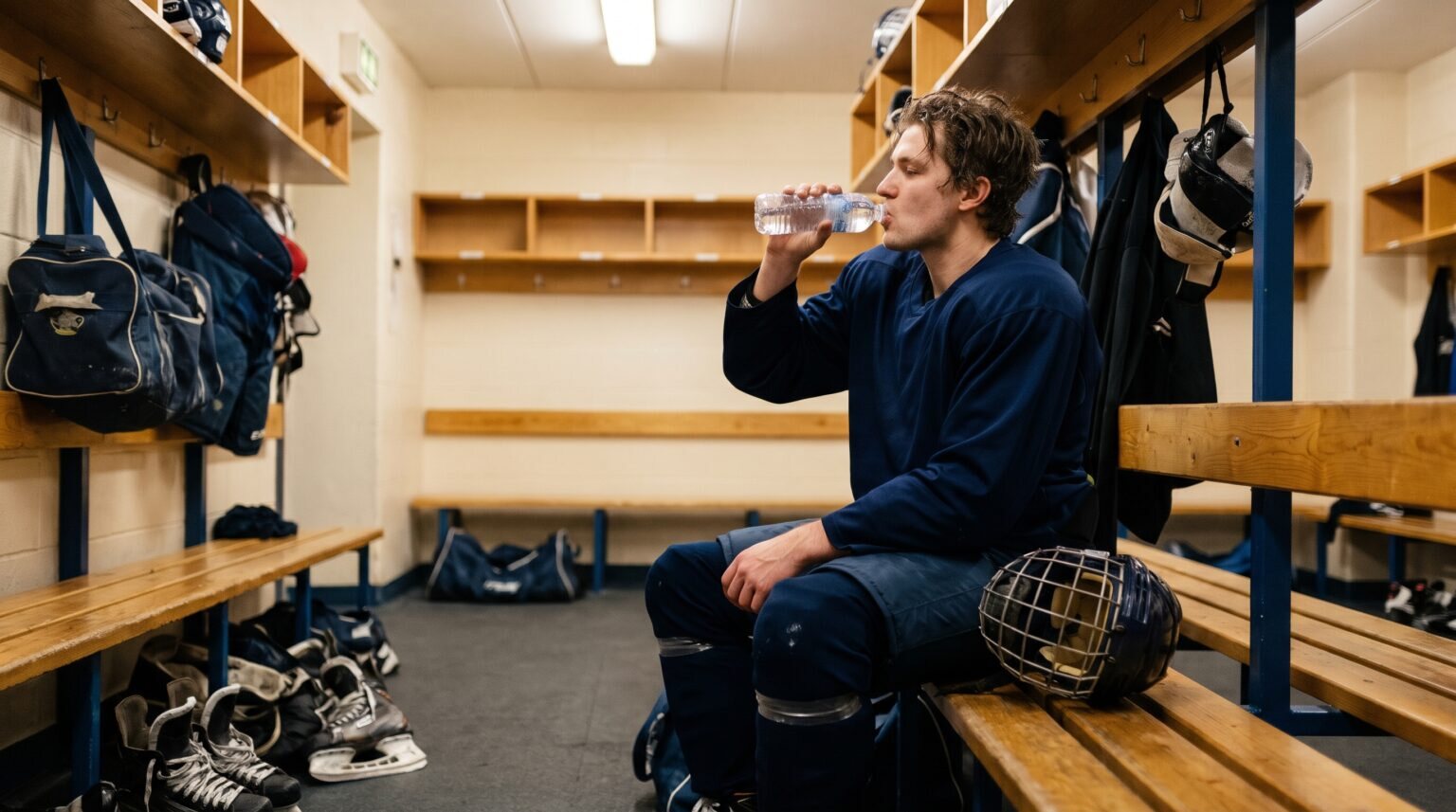
Cold air makes it easy to forget that you are sweating heavily. Full equipment traps heat, shifts are intense, and many players lose a significant amount of fluid in a single game. Thirst is also blunted in the cold. Weighing yourself before and after a game, without drinking, gives a rough idea of how much you lose: each kilogram is about a litre of sweat.
Between games: a simple routine
Right after the game
- Start drinking: water plus an electrolyte drink, especially if you are a salty sweater.
- Have a snack with carbohydrates and protein within an hour, such as chocolate milk, a sandwich or yogurt and fruit.
- Get out of wet gear and warm up.
Before the next game
- Eat a real meal three to four hours before if the schedule allows, built around carbohydrates with moderate protein and low fat.
- Sip fluids steadily and check that your urine is pale yellow.
- Top up with a light carbohydrate snack an hour before.
Overnight
- Prioritize sleep. Late-night arena food and screens cut into recovery.
- Go easy on alcohol at team dinners; it worsens dehydration and sleep.
Our guide to electrolytes for athletes explains sodium and potassium in more detail, and muscle cramps during exercise covers the dreaded third-period cramp.
Looking after bumps and strains
Hip flexor and groin strains, shoulder knocks and back stiffness are common in hockey. Gentle movement, ice for acute bruising and early assessment of anything that does not settle helps you avoid a small issue becoming a long one. Our physiotherapy and massage therapy teams can assess and treat after the weekend.
Head injuries come first
Any player with symptoms of a concussion, such as headache, dizziness, confusion, nausea, sensitivity to light or feeling foggy, must be removed from play and assessed. Ontario’s Rowan’s Law sets out concussion awareness and removal-from-sport requirements for amateur sport. Do not return to the ice on the same day. Worsening headache, repeated vomiting, seizures or drowsiness need emergency care.
After the weekend: when a recovery drip helps
For adult players who finish a tournament exhausted, behind on fluids and short on sleep, an IV drip from our IV therapy menu can replace fluid while you rest in a quiet lounge. Every first drip starts with a health screen, and a registered nurse places and monitors the IV. Drips are not a substitute for treating an injury or a concussion, and anyone with head injury symptoms should be assessed medically instead.
Players in tested competition must check anti-doping rules first; see IV infusion rules for tested athletes. Wellness drips are designed for adults; younger players should focus on food, fluids and rest.
Season-long habits
Consistent sleep, regular meals, strength work in the off-season and paying attention to fatigue all add up. If you feel run down for weeks, blood work for iron and other causes is worth considering; read iron deficiency in athletes and muscle recovery after hard training.
Packing a tournament bag, step by step
Tournament weekends often mean early ice times, long gaps between games and arena food. A well-packed bag makes recovery much easier.
- Two refillable bottles. One for water and one for a sports drink or oral rehydration solution, labelled with your name.
- Familiar snacks. Bananas, bagels, granola bars, pretzels, yogurt and sandwiches travel well and are easy to digest between games.
- A small cooler. It keeps protein options such as chocolate milk, cheese or deli wraps safe until after the game.
- Dry layers. A dry shirt, warm jacket and toque help you avoid getting chilled in a cold rink after sweating.
- A basic first aid kit. Blister care, tape, an ice pack and any personal medications.
- A plan for meals. Know where the team will eat so a long gap does not turn into a vending machine lunch.
Who may consider a recovery drip after a tournament, and who should not
Adults who sometimes consider one
- Adult league and senior players who finish a weekend feeling dry, flat and sore after several games.
- Players who struggled to eat or drink between games because of nerves or a tight schedule.
- Coaches and officials who spent long days in the rink with little time to refuel.
When to choose another path
- Any player with a suspected concussion, who needs a medical assessment and a return-to-play plan, not a drip.
- Players with an injury that is swelling, painful to bear weight on or getting worse.
- Tested athletes, unless the treatment fits anti-doping rules.
- Anyone with heart or kidney disease or on fluid restrictions.
Questions parents and adult players often ask
- How much should I drink between games played two hours apart?
- Is a sports drink better than water during a tournament?
- What should I do about a sore hip, groin or shoulder after the weekend?
- When does a bump or strain need to be checked by a physiotherapist?
- Should I take the next day off the ice?
What the research does not cover yet
Studies show that hockey players lose more sweat than many expect, even in cold rinks, and that heavy gear adds to it. Research has not set clear targets for multi-game weekends with short breaks, and few studies look at adult recreational leagues. IV recovery after tournaments has not been studied in a meaningful way, so drinking, eating and rest remain the main plan.
For sore muscles in the days after a tournament, read what helps with muscle soreness, and for adult players who train mostly on weekends, see recovery for weekend warriors. Families and players at rinks across Vaughan, Woodbridge and Richmond Hill can book physiotherapy and massage at one clinic close to Highway 7.
Finished a big tournament and need to reset? Learn about our IV drips in Woodbridge or call 905-207-7000 to book at AuraWell Health, 4600 Hwy 7, Unit 105, Woodbridge, ON L4L 4Y7, serving Vaughan and Richmond Hill.
Frequently asked questions
Do hockey players really get dehydrated in a cold rink?
Yes. Equipment traps heat and players can lose a lot of sweat in one game, while the cold blunts thirst.
What should I eat between tournament games?
Carbohydrates with some protein soon after a game, and a real meal three to four hours before the next one if possible.
Can I have a recovery drip after a concussion?
A drip does not treat concussion. Anyone with head injury symptoms needs medical assessment first.
Are recovery drips suitable for minor hockey players?
Wellness drips are designed for adults. Younger players should focus on food, fluids and rest.