
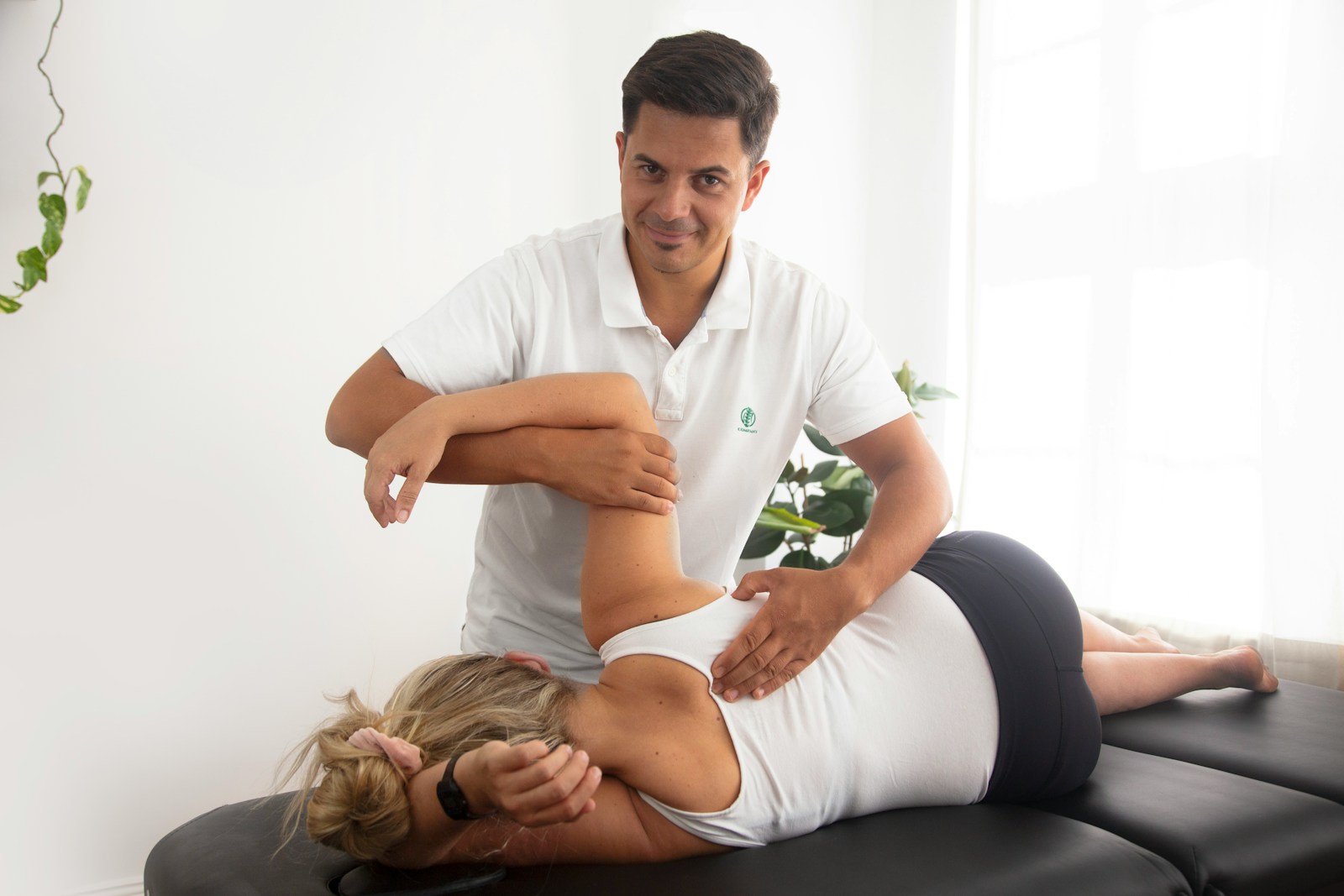
Physiotherapy
How Physiotherapy Supports Injury Recovery
From sports injuries to post-surgical rehab, a structured physiotherapy plan can shorten recovery time and lower the risk of re-injury.
Read articleShockwave therapy sends short acoustic pulses through the skin to a painful tendon or attachment point. At AuraWell it is given by our registered physiotherapists in Woodbridge, as a standalone session or added to a physiotherapy treatment, and always as part of a plan that includes exercise. It is mainly used for pain that has lasted months and has not settled with rest or other care.
For our rehabilitation services, direct insurance billing may be available depending on your provider and plan. If direct billing is unavailable, we will provide the appropriate receipt to submit to your insurer.
Extracorporeal shockwave therapy, often shortened to ESWT, delivers short, high-energy acoustic pulses through the skin to an area where a tendon or the plantar fascia is irritated. It is a non-invasive treatment: there are no needles, no medication and no recovery time away from daily life.
At AuraWell Health, shockwave therapy is given by our registered physiotherapists at 4600 Hwy 7, Unit 105 in Woodbridge. It is never a stand-alone fix. Your physiotherapist uses it as one part of a plan that also includes loading exercises, activity advice and, where it helps, manual therapy, because the evidence for shockwave is strongest when it sits inside that kind of plan.
Shockwave therapy is mainly used for tendon and soft tissue pain that has lasted three months or more and has not settled with rest, exercise or other care. Research supports it for some of these conditions more than others, and your physiotherapist will tell you plainly where the evidence stands for yours.
Long-lasting plantar heel pain is the condition with the most research behind shockwave therapy. Many trials report less pain and better walking function over the following months when shockwave is added to stretching, strengthening and footwear changes.
Calcific tendinopathy of the rotator cuff, where calcium builds up inside a shoulder tendon, is another use with reasonable evidence. Imaging is usually needed first to confirm the deposit, and our Nurse Practitioner can arrange a requisition if you do not already have one.
For lateral elbow pain, Achilles tendinopathy, patellar tendon pain and pain on the outside of the hip, results across studies are more mixed. Some people improve when shockwave is combined with a progressive exercise program; others gain little beyond the exercise itself. We discuss that honestly before you book a course.
Your physiotherapist screens for safety before the first session. Shockwave therapy is not used during pregnancy, over open growth plates in children and teens, over an area with an infection, open wound or tumour, or near a pacemaker or other implanted device. People with a bleeding disorder or who take blood thinners need individual review, and some should not have it.
If you have had a corticosteroid injection in the same area recently, your physiotherapist will advise how long to wait. Pain that comes with numbness, weakness, fever, night pain or unexplained weight loss needs a medical assessment first, and our Nurse Practitioner team is in the same clinic.
Your first visit starts with an assessment so your physiotherapist can confirm where the pain is coming from and whether shockwave suits it. If it does, a little gel is placed on the skin and a hand-held applicator delivers the pulses for a few minutes over the sore area.
Most people feel a strong tapping or deep ache during treatment. The intensity is adjusted to what you can tolerate, and you can ask to pause at any time. Afterward the area may be tender or a little red for a day or two. Most people return to work and normal activity straight afterward, with advice to ease off hard running, jumping or heavy lifting for a short period.
A typical course is three to five sessions about a week apart. Improvement, when it comes, usually builds gradually over the weeks and months after the course rather than right away, because the goal is to help the tissue respond to loading over time.
Your physiotherapist reviews your progress at each visit. If there is no meaningful change by the end of a course, we look again at the diagnosis and the plan rather than simply adding more sessions.
Tendons and the plantar fascia adapt to load. A home program that gradually strengthens the calf, foot, shoulder or forearm muscles involved is the foundation of recovery for most tendon problems, and shockwave is used to support that program, not to replace it.
Because AuraWell brings physiotherapy, chiropractic care, massage therapy and Nurse Practitioner care into one clinic, your physiotherapist can coordinate with the rest of your care team when imaging, a medication review or a different treatment makes more sense.
A standalone shockwave session is $85. When shockwave is added to a physiotherapy treatment, it is an extra $30 on top of that visit. A physiotherapy assessment is needed before your first session if you are new to the clinic.
Because it is delivered by a registered physiotherapist, it is often claimable under the physiotherapy portion of an extended health plan, depending on your plan. Direct billing may be available, and if it is not, we provide a receipt you can submit to your insurer.
AuraWell Health is on Highway 7 near Pine Valley Drive in Woodbridge, with free parking at the door and a wheelchair-accessible clinic, a short drive from Vaughan, Maple, Kleinburg, Concord, Thornhill and Richmond Hill. Visits are by appointment, Monday to Friday 9 am to 7 pm and Saturday 10 am to 4 pm. Call 905-207-7000 to book.
Most people feel a strong tapping or deep ache during the few minutes of treatment. Your physiotherapist adjusts the intensity to what you can tolerate, and some tenderness for a day or two afterward is common.
A typical course is three to five sessions about a week apart. Your physiotherapist reviews progress at each visit and changes the plan if there is no meaningful improvement.
A standalone shockwave session is $85, or $30 when added to a physiotherapy treatment. New patients have a physiotherapy assessment first.
Because a registered physiotherapist delivers it, shockwave is often claimable under the physiotherapy portion of an extended health plan, depending on your plan. Direct billing may be available.
No. Physiotherapists in Ontario are primary contact practitioners, so you can book directly. A few insurance plans ask for a referral before they reimburse physiotherapy, so check your plan booklet.
Most people return to normal activity straight afterward. Your physiotherapist may ask you to ease off running, jumping or heavy lifting for a short time and will give you a home exercise plan to follow.
It is not used during pregnancy, over growth plates in children and teens, over an infection, wound or tumour, or near a pacemaker. People with bleeding disorders or on blood thinners need individual review first.
From sports injuries to post-surgical rehab, a structured physiotherapy plan can shorten recovery time and lower the risk of re-injury.
Read article
How muscles recover after hard training and what actually speeds it up: sleep, protein, carbs, fluids, physio, massage, and where an IV drip fits.
Read article
Evidence-based chiropractic treatment can relieve back pain, neck tension, and headaches while improving posture.
Read article