Deep Tissue Massage: Benefits and What to Expect
Deep tissue massage uses slow, firm pressure to work on tight muscles and long-held knots, and many people find it eases muscle tension, stiffness and some kinds of ongoing pain. Research suggests massage can reduce pain and improve how people feel in the short term, especially when it is part of a wider plan that includes movement. Some soreness for a day or two afterwards is normal, and deeper pressure is not automatically better.
This guide explains what deep tissue massage is, its realistic benefits, what happens during a session with a Registered Massage Therapist, and who should check with a clinician first.
What deep tissue massage is
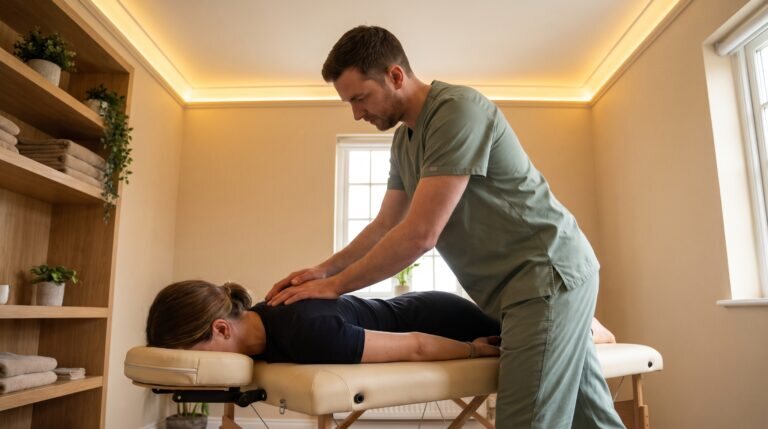
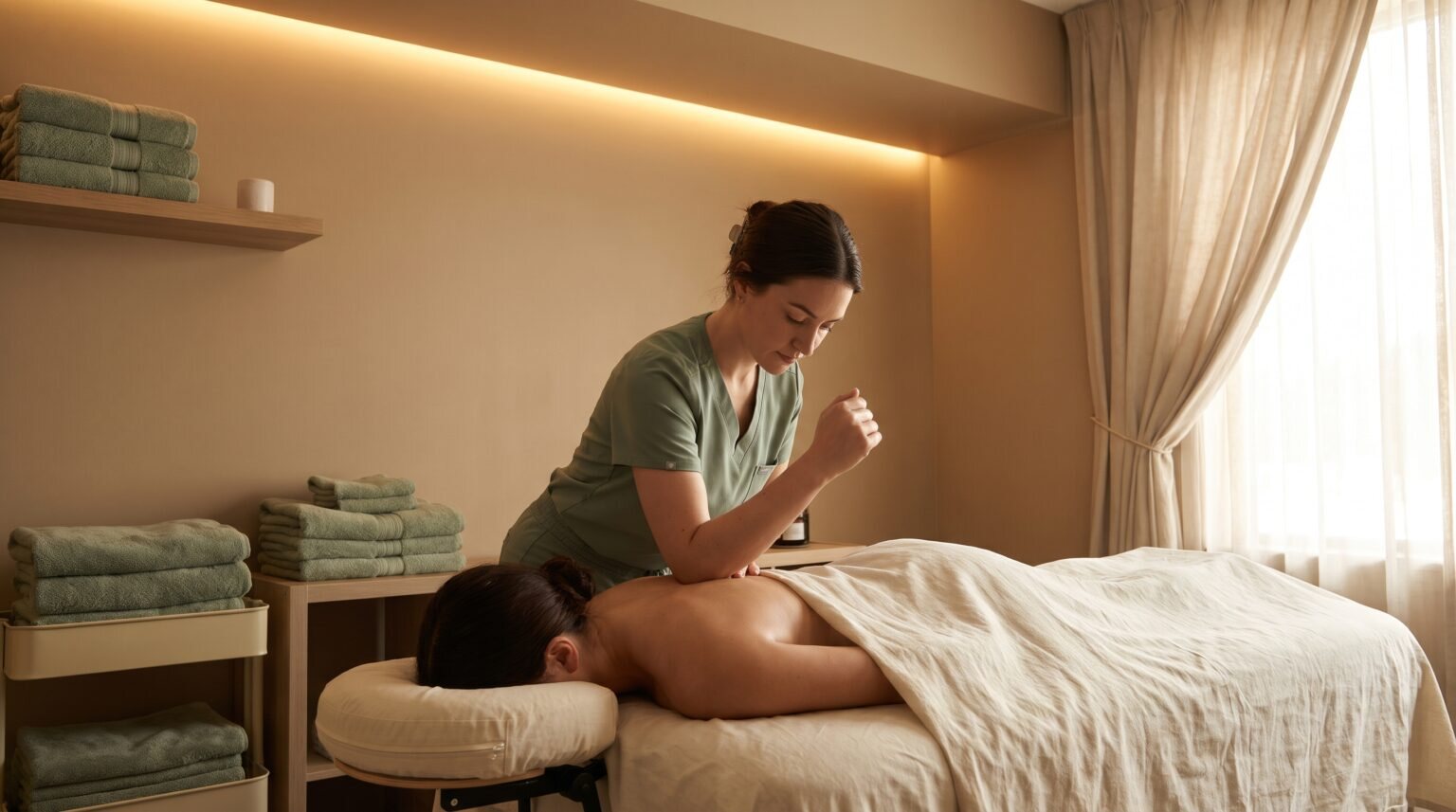
Deep tissue massage is a style of therapeutic massage that works on the deeper layers of muscle and the connective tissue around them. Your therapist uses slow strokes and sustained pressure from the hands, forearms or elbows, focusing on specific areas rather than a light, even pressure over the whole body. It is different from relaxation massage, which uses gentler, flowing strokes mainly to calm the nervous system.
“Deep” refers to the layers being targeted, not to how much it should hurt. A skilled Registered Massage Therapist (RMT) works gradually, checking in with you so the pressure stays effective without making you brace against it.
Benefits people seek, and what is realistic
- Less muscle tension and stiffness. Common in the neck, shoulders and upper back from desk work, driving and phone use.
- Help with ongoing pain. Research suggests massage can ease chronic low back and neck pain for some people in the short term, particularly alongside exercise.
- Support for training and sport. Many active people use it to manage muscle tightness during heavy training blocks.
- Recovery alongside rehabilitation. Therapeutic massage can be timed around physiotherapy or chiropractic visits during injury recovery.
- Feeling more relaxed. Even firm massage often leaves people calmer and sleeping better that night.
Some claims go further than the evidence. Massage does not “flush toxins” out of muscles, it is not a treatment for serious medical conditions, and benefits from a single session usually fade unless they are supported by movement, posture changes and, where needed, other treatment.
Signs deep tissue massage may suit you
People often ask how to know whether they need deep tissue work rather than a gentler style. It may be worth discussing with an RMT if you have:
- Tight bands or tender knots that keep coming back in the same places
- Stiffness that limits how you turn your neck, lift your arms or bend
- Muscle tension linked to repetitive work, training or long hours at a desk
- Found lighter massage pleasant but not long-lasting
You do not have to choose the style yourself. Book the length of session you want and tell your therapist your goal; they will suggest the technique after a short assessment.
What to expect during a session
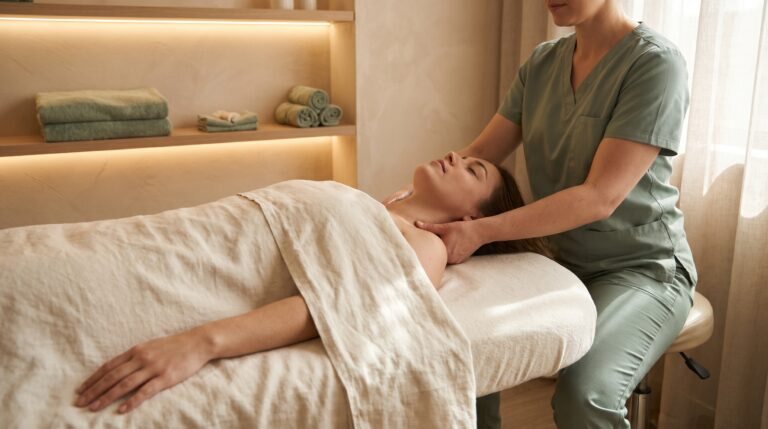
Your RMT starts with a brief health history, asks about your concerns and any areas to avoid, and agrees a plan with you. You undress only to your comfort level and stay covered with a sheet, with only the area being treated uncovered.
The therapist usually warms the tissue with lighter strokes before working more deeply. You may feel pressure and a “good” ache over tight areas. Sharp, burning or shooting pain is not the goal: say so straight away, and you can ask for less pressure, a different technique or a pause at any time. Breathing slowly helps muscles let go.
Sixty minutes suits most first visits. A 30-minute session can focus on one area, and 90 minutes allows full-body work with extra time on problem spots.
Aftercare and soreness
Mild soreness for a day or two after deep work is common, a bit like the feeling after a new workout. To help it settle:
- Drink some water and eat normally
- Move gently, with a walk or light stretching, rather than staying still
- Use warmth, such as a shower or heating pad, if muscles feel tight
- Skip very strenuous exercise for the rest of the day
Tell your therapist at your next visit how you felt, so the pressure and focus can be adjusted. Bruising, pain that worsens over several days or numbness are not expected; mention them to your RMT or a clinician.
Deep tissue compared with other massage styles
- Relaxation massage: lighter, flowing strokes for general tension and stress.
- Therapeutic massage: focused treatment for a specific problem, such as recovery from an injury, often combining several techniques.
- Deep tissue massage: slower, firmer pressure on deeper muscle layers and stubborn knots.
- Hot stone massage: gentle warmth to help muscles soften before deeper work.
Many sessions blend styles. Your RMT may start lightly, work deeply on one or two areas and finish with calmer strokes, adjusting as you go.
Who should check first
Deep pressure is not suitable for everyone. Tell your RMT, and check with a clinician if unsure, if you:
- Have had a blood clot or have unexplained calf pain and swelling
- Take blood thinners or bruise easily
- Have had recent surgery, a fracture or a new injury
- Have osteoporosis, a bleeding disorder, an infection or a fever
- Are expecting a baby
- Are being treated for cancer
New pain after an accident, numbness or weakness, or pain with fever should be assessed medically before any massage.
Deep tissue massage at AuraWell
At our Woodbridge clinic, registered massage therapy includes deep tissue, therapeutic, relaxation and hot stone massage, in warm, quiet, private rooms. Sessions are $75 plus HST for 30 minutes, $100 plus HST for 45 minutes, $125 plus HST for 60 minutes and $170 plus HST for 90 minutes. HST applies to treatment from an RMT, OHIP does not cover massage therapy, and most extended health plans include a yearly amount for it. Direct billing may be available depending on your plan, and you receive a receipt after every visit; see our insurance page.
Massage often works best as part of a plan. If tension keeps returning, your RMT can coordinate with our physiotherapists or chiropractors, and our guide to chiropractor vs physiotherapist explains how those services differ.
Related reading: does acupuncture work.
Book your massage therapy assessment or call 905-207-7000. Clients from across Vaughan visit us at 4600 Hwy 7, Unit 105, Woodbridge.
Frequently asked questions
How do you know when you need a deep tissue massage?
Knots that keep returning, stiffness that limits how you move, or tension from repetitive work or training are common reasons. If lighter massage feels pleasant but does not last, deeper work may be worth discussing with your RMT.
Why am I sore after a massage?
Firm pressure on tight muscles can leave them tender for a day or two, much like after a new workout. Gentle movement, warmth and water usually help; soreness that grows worse or comes with bruising or numbness should be checked.
What are the health benefits of massage therapy?
Research suggests massage can ease muscle tension and some chronic pain in the short term and help people feel more relaxed. Benefits last longer when massage is paired with movement, posture changes and other treatment where needed.
Do deep tissue massages get rid of knots?
Deep tissue work can ease tight, tender spots and make them feel looser, but knots often return if the cause, such as posture or training load, stays the same. Regular movement and strengthening help the effect last.
Do knots pop when you massage them?
No. Muscle knots are tight, sensitive areas of muscle rather than lumps that burst. Any popping you hear during massage is usually a joint moving, not a knot breaking up.
Which parts of the body should not be massaged?
Therapists avoid firm pressure over the front of the neck, the back of the knee, the inner upper arm and groin, the abdomen in some situations, and any area with a clot, fracture, infection or recent surgery. Your RMT adjusts the plan around your health history.
Does deep tissue massage help with lymphatic drainage?
Not really. Lymphatic drainage uses very light, rhythmic strokes, which is quite different from the firm pressure of deep tissue work. If swelling is your concern, ask about the right technique and get unexplained swelling checked by a clinician.