Osteopath vs Chiropractor: Which Should You See?
Both osteopaths and chiropractors use hands-on treatment for back, neck and joint pain, so the overlap is real. In Ontario the main differences are regulation and style: chiropractors belong to a regulated health profession and focus on the spine and joints, while osteopathic manual practitioners use gentle, whole-body techniques and are not a government-regulated profession. If you want a regulated practitioner who can assess and diagnose a spinal problem, a chiropractor is a sensible first stop; if you prefer slow, gentle work on long-standing tension, osteopathy may suit you better.
This guide compares the two side by side, explains what each visit involves and helps you decide where to start.
What “osteopath” means in Canada
The word causes confusion because it describes two different groups. Osteopathic physicians (DOs) are medical doctors, mostly trained in the United States, who can prescribe and practise medicine. Osteopathic manual practitioners are trained in manual therapy only. When people in Ontario talk about “seeing an osteopath” for back or neck pain, they almost always mean an osteopathic manual practitioner.
Manual osteopathy is not a regulated health profession in Ontario. Practitioners usually belong to a professional association, and each insurer decides which associations it recognizes for coverage. That is worth checking before you book anywhere.
What a chiropractor is
Chiropractors in Ontario are regulated health professionals with their own college. They assess muscles, joints and the nervous system, and focus mainly on the spine. Treatment may include joint mobilization, spinal manipulation (the quick, controlled movement that can produce a click), soft-tissue work and exercise advice. Chiropractors use the title “Dr.” as part of their profession; it does not mean they are medical doctors.
Osteopath vs chiropractor at a glance
- Regulation in Ontario: chiropractors are regulated; osteopathic manual practitioners are not.
- Main focus: chiropractic centres on the spine and joints; osteopathy looks at the whole body as one connected system.
- Typical techniques: chiropractic uses mobilization, sometimes manipulation, soft-tissue work and exercise; osteopathy uses soft-tissue release, joint articulation, muscle energy techniques and myofascial work.
- Feel of a session: chiropractic visits are often shorter and more targeted; osteopathy sessions tend to be slower and gentler.
- Insurance: most extended health plans list both, often with separate yearly limits.
What happens during each visit
A chiropractic visit
Expect a thorough history, an examination of posture, movement and joints, and a plain-language explanation of what is likely driving your symptoms. When it is appropriate, treatment starts on the first visit. At AuraWell, our chiropractors, Dr. Jullin Negahban, DC, and Dr. Mohammadali Amoukarami, use gentle spinal and joint mobilization, manual therapy, soft-tissue techniques and exercise recommendations, and explain every technique before it begins.
An osteopathy session
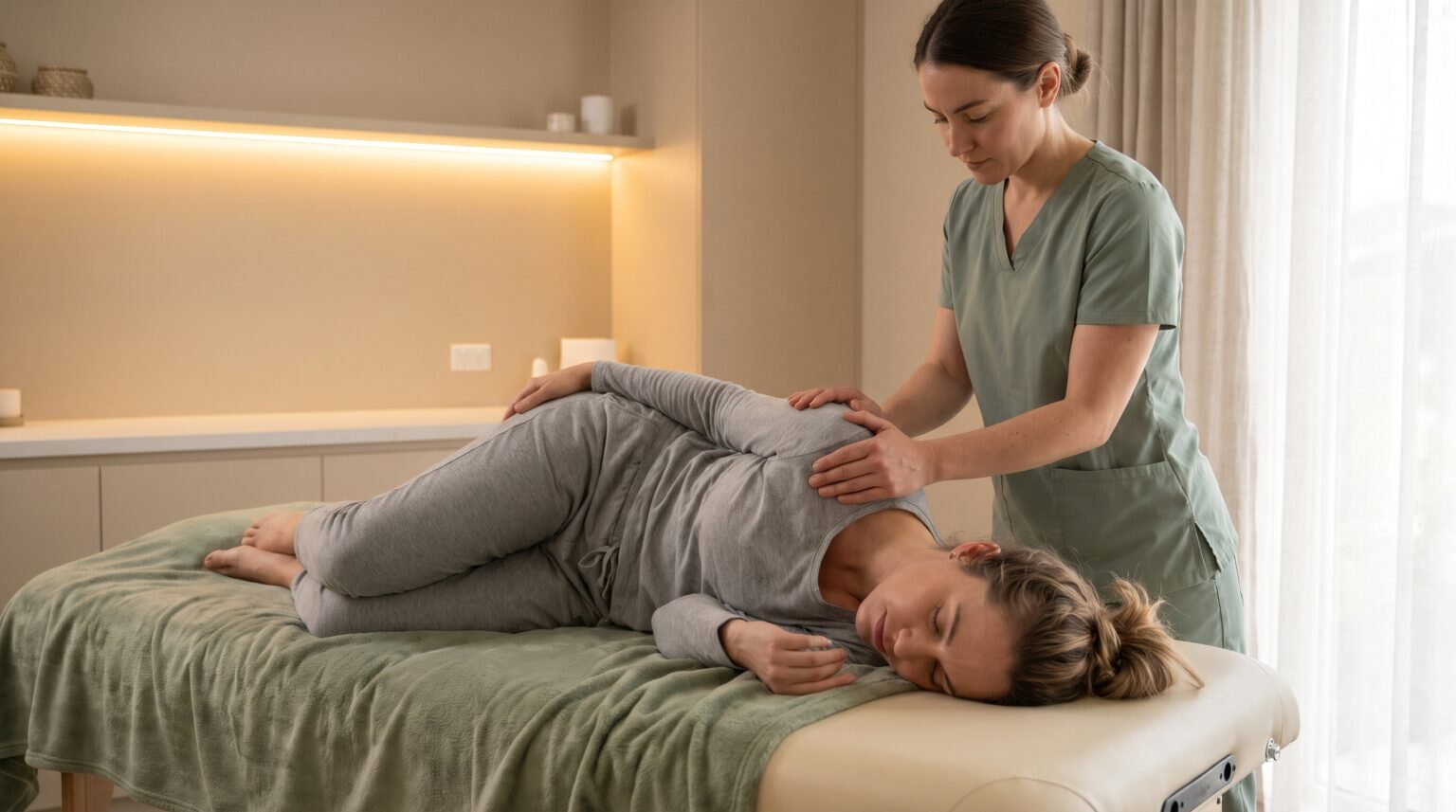
Your first osteopathy visit begins with a conversation about your symptoms, work and activities. The practitioner assesses posture and the mobility of joints and soft tissues, looking beyond the painful area to how the rest of the body contributes. You stay comfortably clothed, and techniques feel like slow stretching and positioning. At AuraWell, osteopathic manual therapy is provided by Amir Hossein Yazdani, who has more than 18 years in physical medicine and rehabilitation.
Which is better for back and neck pain?
Research suggests that, for common low back and neck pain, hands-on treatment combined with exercise and staying active tends to help more than passive treatment alone. Neither profession has a clear edge for everyone. In practice, the better choice depends on you:
- Consider a chiropractor for a recent, clearly spinal problem such as low back pain or stiffness after lifting, neck pain from desk work, or pain that radiates into the buttock, especially if you want a regulated practitioner to assess it.
- Consider osteopathy for long-standing aches that move around the body, postural strain, tension held in the neck, jaw and shoulders, or if firmer techniques have felt uncomfortable in the past.
- Consider physiotherapy if you need a structured exercise program, rehabilitation after surgery or help returning to sport. Our guide to osteopath vs physiotherapist covers that comparison.
Questions to ask before you book
Whichever direction you lean, a few questions help you judge a practitioner before the first visit:
- What training do you have, and which college or association are you registered with?
- Will my insurance plan reimburse your services, and do you bill directly?
- How many visits do you usually expect for a problem like mine, and how will we measure progress?
- Which techniques do you use, and can you use gentler ones if I prefer?
- When would you refer me to a physiotherapist, a Nurse Practitioner or a doctor instead?
Clear, direct answers are a good sign. Be wary of anyone who promises a cure, asks you to prepay for a long block of visits at the start, or discourages you from seeking a medical opinion.
Safety: what to know before hands-on treatment
Both approaches are generally considered safe for screened patients. Mild soreness for a day or two is the most common effect. Rare but serious complications have been reported after forceful neck manipulation, which is why a good practitioner screens your history first and offers gentler options. Osteopathic techniques are typically low-force.
Whichever you choose, get medical help first, not hands-on treatment, if back or neck pain comes with new numbness or weakness, loss of bladder or bowel control, fever, unexplained weight loss, or a sudden severe headache. These need an urgent medical assessment, and at an emergency level if bladder or bowel changes appear.
Cost and insurance in Ontario
OHIP does not cover chiropractic care or manual osteopathy for most adults, so both are usually paid privately or through extended health benefits. At AuraWell, chiropractic care is $130 for a 45-minute initial assessment and $90 for a treatment visit, and osteopathy is $130 for a 60-minute initial assessment and $110 for a 45-minute follow-up. We offer direct billing for both where your plan allows it. Check your plan for the yearly maximum and, for osteopathy, which practitioner types and associations it recognizes. Our guide to OHIP and benefits coverage explains the rules in more detail.
You do not have to choose alone
For many people in Woodbridge and Vaughan, the hardest part is knowing where to start. At AuraWell, chiropractors, an osteopathic manual practitioner and physiotherapists work in one clinic and, with your consent, share one record, so your first clinician can point you to the other if that suits your problem better. Neither option requires a referral.
Related reading: physiotherapy for sciatica.
Book your chiropractic or osteopathy assessment or call 905-207-7000 and our clinic team will help you choose.
Frequently asked questions
What is the difference between an osteopath, a physiotherapist and a chiropractor?
Osteopathic manual practitioners use gentle, whole-body hands-on techniques, chiropractors focus on the spine and joints, and physiotherapists lead with assessment and progressive exercise. In Ontario, chiropractors and physiotherapists are regulated professions, while manual osteopathy is not.
How much does an osteopath cost?
Fees vary by clinic and session length. At AuraWell, the first osteopathy visit runs an hour and costs $130 including treatment, a 45-minute follow-up visit costs $110, and many benefit plans reimburse some or all of it.
Is osteopathy a sham?
Not entirely. Hands-on treatment can ease pain and stiffness for some people, but some techniques taught in osteopathy rest on theories with weak research support, and standards vary because the field is unregulated in Ontario. Choose a practitioner who is honest about the evidence and refers you on when needed.
Which is safer, an osteopath or a chiropractor?
Both are generally low risk for screened patients, and mild soreness is the usual side effect. Osteopathic techniques are typically gentler, while forceful neck manipulation carries rare but serious risks, so screening and gentle options matter whichever you choose.
Can an osteopath realign the spine?
Hands-on treatment can change how joints move and how they feel, but it does not push bones back into a fixed position. Pain relief comes mainly from easing muscle tension and joint stiffness and helping you move more comfortably.
Who is more qualified, an osteopath or a chiropractor?
In Ontario, chiropractors complete a regulated professional program and are registered with a college, while osteopathic manual practitioners train through private programs and belong to voluntary associations. Ask any practitioner about their training and registration before you book.
Should I see an osteopath or chiropractor for lower back pain?
Either can help with common low back pain. A chiropractor suits a recent, clearly spinal problem; an osteopath suits people who prefer slow, gentle techniques. Pain with numbness, weakness or bladder changes needs a medical assessment first.